
AR Muzzle Device Design and Selection Guide
TL;DR: Article Summary
- Start with a flash hider for General and Duty / Defense, or a brake for Competition and Precision. Choose according to the primary benefit, weighing recoil and muzzle control against flash, blast, length, and weight.
- Compatibility and alignment are prerequisites. Match the caliber, barrel threads, seating surface, and accessory interface. Matching threads alone does not establish adequate projectile clearance or correct alignment.
- Evaluate each gas-control function separately. Compensators control muzzle movement; blast-forwarding devices redirect discharge; suppressors reduce sound. Hybrid designs combine functions, but the label does not establish how well each performs.
- Choose the accessory system before its mounting muzzle device. Prioritize secure, repeatable attachment and useful unsuppressed performance. Retain removable attachment unless a specific retention or barrel-length objective justifies pin-and-weld.
- Properly heat-treated steel is the practical material baseline. Protective finishes support 4140/4150; appropriately treated 416 and 17-4PH offer greater inherent corrosion resistance. Titanium prioritizes weight savings, while Alloy 718 addresses greater heat exposure.
- Select the finish for the surface demands. Phosphate is a conventional option that depends on supplementary corrosion protection. Compatible nitride/QPQ treatments add surface hardness and corrosion resistance; DLC and CrCN offer specific wear-related benefits. No finish replaces suitable underlying material and heat treatment.
Introduction
A muzzle device shapes how propellant gases leave the barrel, affecting visible flash, recoil, muzzle movement, blast direction, and sound. It can also serve as the mounting interface for a suppressor or removable blast shield. The right choice depends on which benefits matter most and what tradeoffs in blast, size, weight, and serviceability are acceptable.
This guide covers the compatibility, dimensional quality, materials, finishes, gas-control features, and mounting arrangements that determine whether a muzzle device suits the rifle and its intended use.
🔵 Design Priorities at a Glance
Compatibility and dimensional alignment come first, followed by the device’s gas-control function and secure attachment. Device type determines the main tradeoffs in flash, recoil, muzzle movement, blast, and sound. Materials, heat treatment, and finish support durability under repeated heat and gas exposure, while mounting choices affect accessory use and serviceability.
Importance indicates how much attention each factor deserves; Decision Role identifies whether it establishes compatibility, reflects dimensional conformance, determines performance tradeoffs, or supports secure attachment and durability.
| AR Muzzle Device Design Priorities at a Glance | |||
|---|---|---|---|
| Design Factor | Importance | Decision Role | Why It Matters |
| Design Factor Compatibility | Importance 10/10 | Decision Role Required Compatibility | Why It Matters Caliber, barrel interface, handguard clearance, and suppressor or accessory interfaces determine which devices can be used. |
| Design Factor Dimensional Quality & Alignment | Importance 10/10 | Decision Role Safety & Functional Conformance | Why It Matters Thread geometry, seating surfaces, projectile-passage alignment, and accessory-mount dimensions affect secure seating, projectile clearance, and alignment of attached accessories. |
| Design Factor Device Types & General Characteristics | Importance 9/10 | Decision Role Major Performance Tradeoff | Why It Matters Gas-control features determine the balance of flash suppression, recoil reduction, muzzle control, blast direction, and sound suppression, with accompanying size and weight tradeoffs. |
| Design Factor Mounting & Attachment | Importance 9/10 | Decision Role Attachment Security & Serviceability | Why It Matters The attachment arrangement maintains seating and required orientation, supports accessory retention, and determines how easily the device or surrounding components can be replaced. |
| Design Factor Materials & Heat Treatment | Importance 8/10 | Decision Role Durability, Corrosion Resistance & Weight | Why It Matters Material and finished condition affect resistance to deformation, cracking, oxidation, and erosion under repeated heat and gas exposure, along with corrosion resistance and muzzle weight. |
| Design Factor Finish | Importance 6/10 | Decision Role Surface Protection & Durability | Why It Matters Surface treatment affects corrosion protection, wear resistance, and friction at contacting interfaces. Its thermal stability, coverage, and thickness influence durability and fit. |

|
|||
🔵 Compatibility
Importance: 10/10 — Required Compatibility
Muzzle device compatibility depends on the barrel’s muzzle interface, the intended caliber, and any accessory the device must support. Small-frame, large-frame, and PCC labels alone do not establish fit.
- Caliber: The device must be explicitly suitable for the intended caliber. Matching barrel threads alone does not establish adequate projectile clearance.
- Barrel Interface: Thread diameter, pitch, and direction must match the barrel. The device’s seating requirements must also correspond with the barrel’s muzzle configuration.
- Handguard Clearance: Handguard length must leave the device’s gas outlets unobstructed. A handguard that extends over a brake or compensator can expose it to lateral muzzle blast. Do not assume a device is suitable for recessed installation merely because it fits inside the handguard; that arrangement requires explicit manufacturer approval.
- Suppressor Interface: A muzzle device that doubles as a suppressor mount must be approved for the specific suppressor and mounting system. Sharing a manufacturer or caliber designation does not establish compatibility.
- Blast-Shield Interface: Add-on blast shields require a compatible host device. Distinguish these accessories from standalone blast-forwarding devices that attach directly to the barrel.
Selection Recommendation
Establish the intended caliber and barrel interface before comparing devices. If a suppressor or removable blast shield is planned, identify its supported mounting system first; that requirement determines which host devices remain eligible.
🔵 Dimensional Quality & Alignment
Importance: 10/10 — Safety & Functional Conformance
A compatible muzzle device must also have correctly formed threads, seating surfaces, and internal clearance. Compatibility identifies the intended interface; dimensional quality determines whether the finished device conforms to that design.
| Critical Muzzle Device Dimensional Features | ||
|---|---|---|
| Critical Feature | Critical Dimensional Qualities | Why It Matters |
| Critical Feature Barrel Threads | Critical Dimensional Qualities Thread form, diameter, pitch, and alignment with the device’s bore | Why It Matters Allow the device to engage the intended barrel interface without binding or excessive movement. |
| Critical Feature Seating Surface | Critical Dimensional Qualities Flatness or specified contour, surface uniformity, and orientation relative to the threaded axis | Why It Matters Supports consistent seating. Irregular or incorrectly oriented surfaces can leave the device tilted despite matching threads. |
| Critical Feature Projectile Passage | Critical Dimensional Qualities Diameter, straightness, and alignment with the mounting interface | Why It Matters Provides clearance through the device. Incorrect size or alignment can permit projectile contact. |
| Critical Feature Accessory-Mount Surfaces | Critical Dimensional Qualities Profile, diameter, alignment, and relative position of mating and retention features | Why It Matters Allow a compatible suppressor or blast shield to seat and engage as intended. Incorrect geometry can prevent full engagement or introduce misalignment. |
|
|
||
Alignment also depends on the barrel and the assembled interfaces. A correctly manufactured device does not establish that the complete assembly is correctly aligned.
Selection Recommendation
Treat dimensional conformance as a prerequisite. Matching threads, a premium alloy, or an advertised “precision-machined” construction does not independently establish correct seating or alignment. Keep dimensional inspection and assembled-alignment verification separate from the product’s compatibility claims.
🔵 Materials & Heat Treatment
Importance: 8/10 — Durability, Corrosion Resistance & Weight
Muzzle devices experience brief pulses of hot, pressurized propellant gas, rapid heating and cooling, and erosion where gas and entrained particles encounter exposed surfaces. Installation torque loads the threaded connection and body, while handling impacts and attached accessories can impose additional mechanical loads. Environmental exposure adds corrosion concerns.
These demands vary with the device’s function and configuration. Material and heat treatment influence resistance to permanent deformation, cracking, surface damage, and deterioration at elevated temperatures. Strength, hardness, toughness, and corrosion resistance therefore matter for different reasons; no single property establishes overall durability.
Evaluate each alloy in its finished condition. Room-temperature strength alone does not establish elevated-temperature performance, and hardness alone does not predict gas-erosion resistance or service life.
🔹 4140 / 4150 Chrome-Moly Steel
4140 and 4150 are chromium-molybdenum steels whose finished strength, hardness, and toughness depend on quenching and tempering. Their properties should be evaluated together: resistance to permanent deformation, resistance to fracture, and retention of those properties after heating are separate concerns.
Evaluated Condition: Quenched and tempered; finished properties depend on the specified condition.
- Strength: The quenched-and-tempered condition provides resistance to permanent deformation under mechanical loading.
- Strength–Toughness Balance: Heat treatment can establish a useful combination of strength and resistance to fracture, rather than emphasizing maximum hardness alone.
- Stiffness: Greater elastic modulus than Grade 5 titanium limits elastic deflection under comparable geometry and loading.
- Thermal Softening: Sufficiently elevated temperatures and exposure times can further temper the steel, reducing its original hardness and strength.
- Corrosion Resistance: Bare chrome-moly steel has less inherent environmental corrosion resistance than the stainless, titanium, and nickel-alloy alternatives discussed here.
- 4140 Versus 4150: The higher carbon content of 4150 provides greater potential hardness, but does not establish a strength or service-life advantage over 4140 in an unspecified finished condition.
- Hot-Gas Erosion: Room-temperature hardness does not establish resistance to progressive surface loss under hot-gas exposure. Temperature, oxidation, and the finished material condition also matter.
- Weight: Density is approximately comparable with the stainless-steel alternatives. Changing between these steels offers little material-based weight reduction at equal volume.
- Protective Finish: Evaluate corrosion protection as a complete material-and-finish combination, including protection where the finish becomes worn or damaged.
🔹 17-4PH Stainless Steel
17-4PH is a precipitation-hardening stainless steel that combines high strength with inherent corrosion resistance. H900 emphasizes strength and hardness, with less ductility and toughness than higher-temperature-aged conditions. That balance matters because resistance to permanent deformation and resistance to cracking are separate requirements.
Evaluated Condition: Solution heat-treated and aged (H900).
- Strength: High yield strength provides resistance to permanent deformation. H900 develops greater strength than higher-temperature-aged conditions of the same alloy.
- Hardness: Greater hardness than higher-temperature-aged conditions supports resistance to localized indentation. This does not independently establish sliding-wear or gas-erosion life.
- Corrosion Resistance: Provides greater inherent environmental corrosion resistance than unprotected chrome-moly steel, including where an applied finish wears.
- Toughness and Ductility: H900 sacrifices toughness and ductility relative to higher-temperature-aged conditions. Its greater resistance to permanent deformation should not be confused with greater resistance to impact fracture or crack propagation.
- Thermal Stability: Sufficiently prolonged elevated-temperature exposure can alter the precipitation-hardened condition and its mechanical properties. The initial H900 designation does not establish that its original strength and toughness remain unchanged throughout service.
- Hot-Gas Erosion: Strength, hardness, and oxidation resistance are relevant to surface durability, but they do not establish a measured erosion rate. Any comparative erosion assessment remains an inference unless supported by representative testing.
- Weight and Stiffness: H900 has approximately the same density and elastic stiffness as other steel conditions. Its higher strength increases resistance to permanent deformation, but does not substantially reduce weight or elastic deflection for the same geometry and loading.
- Material Condition: These comparisons apply to wrought H900 material. An unspecified “heat-treated 17-4PH” product — or an additively manufactured product — should not automatically be assigned the same properties.
🔹 416 Stainless Steel
416 is a hardenable martensitic stainless steel with sulfur added to improve machinability. Its hardened condition provides useful mechanical properties and inherent corrosion resistance, but those properties should not be generalized from other stainless-steel families.
Evaluated Condition: Quenched and tempered.
- Strength and Hardness: Hardening and tempering develop resistance to permanent deformation and localized indentation. Annealed 416 does not represent the condition evaluated here.
- Corrosion Resistance: Provides greater inherent environmental corrosion resistance than bare chrome-moly steel.
- Stiffness: Greater elastic modulus than Grade 5 titanium limits elastic deflection under comparable geometry and loading.
- Corrosion Resistance: Its stainless designation does not establish corrosion resistance equivalent to 17-4PH or the titanium and nickel-alloy alternatives.
- Thermal Softening: Sufficiently elevated temperatures and exposure times can alter the hardened-and-tempered condition, reducing its original mechanical properties.
- Toughness: The free-machining composition and finished heat treatment influence fracture behavior. A toughness ranking requires condition-specific evidence rather than an assumption based on hardness or the stainless designation.
- Hot-Gas Erosion: Useful room-temperature hardness does not establish elevated-temperature surface durability or a measured erosion-life advantage.
- Weight: Density is approximately comparable with chrome-moly steel and 17-4PH, providing little material-based weight reduction at equal volume.
- Machinability: Easier machining is a production characteristic. It does not independently establish superior dimensions, surface quality, or durability in the finished product.
🔹 Grade 5 Titanium
Grade 5 titanium combines low density, useful strength, and strong environmental corrosion resistance. Its lower stiffness and temperature-dependent properties remain important tradeoffs; high strength relative to weight does not establish equivalent behavior to steel.
- Weight: Substantially lower density than steel and Alloy 718 reduces mass at equal material volume.
- Strength Relative to Weight: Provides useful resistance to permanent deformation without the density of the steel and nickel-alloy alternatives.
- Corrosion Resistance: Provides strong inherent environmental corrosion resistance without depending on a conventional protective coating in the same way as chrome-moly steel.
- Stiffness: Lower elastic modulus produces greater elastic deflection than steel or Alloy 718 under identical geometry and loading.
- Elevated-Temperature Strength: Room-temperature strength does not persist unchanged as temperature rises. Grade 5 titanium does not offer Alloy 718’s high-temperature strength retention.
- Heat Capacity per Unit Volume: Lower volumetric heat capacity than steel or nickel alloys can produce a greater temperature rise for equal deposited heat in an equal-volume component.
- Hot-Gas Erosion: Elevated-temperature strength and oxidation behavior influence resistance to surface loss under concentrated hot-gas exposure. These properties support a qualitative assessment, but do not establish a measured erosion rate or service life.
- Finished Weight: Compare actual product weights. Differences in material volume can reduce or outweigh the density advantage.
- Interface Wear: Galling depends on the contacting material pair, surface condition, and treatment; corrosion resistance does not establish resistance to adhesive wear.
- Material Condition: These comparisons apply to wrought, annealed Grade 5 material. Other thermal-processing or manufacturing conditions should not automatically inherit the same properties.
🔹 Nickel Alloy 718
Alloy 718, commonly sold under the INCONEL name, is a precipitation-hardenable nickel-chromium alloy developed for elevated-temperature strength. Its principal distinction is the combination of hot strength and oxidation resistance, accompanied by greater density.
- Elevated-Temperature Strength: Retains strength at elevated temperatures where the other material families may lose more of their room-temperature capability.
- Oxidation Resistance: Resists elevated-temperature oxidation, addressing a different degradation mechanism from mechanical deformation.
- Strength: The appropriately aged condition provides substantial resistance to permanent deformation.
- Stiffness: Elastic modulus is broadly comparable with steel and greater than Grade 5 titanium, limiting deflection under otherwise comparable loading and geometry.
- Corrosion Resistance: Provides strong inherent resistance to a range of corrosive environments.
- Weight: Greater density than the steel and titanium alternatives increases mass at equal material volume.
- Hot-Gas Erosion: Hot strength and oxidation resistance support a favorable qualitative assessment, but do not establish a specific erosion rate or firing-life advantage.
- Manufacturing Route: Additive properties depend on build orientation, internal defects, heat treatment, and other post-processing. Wrought-property data should not automatically be assigned to a printed product.
- Practical Value: Additional high-temperature capability has limited value when it is not needed. Compare that benefit with the finished product’s weight and price.
- Alloy Identification: “Inconel” identifies an alloy family or trade-name grouping, not one composition. The properties discussed here apply specifically to Alloy 718.
Selection Recommendation
Properly heat-treated 4140/4150 with an appropriate protective finish remains a practical general-purpose baseline. Hardened 416 offers an alternative with greater inherent corrosion resistance, although its finished condition still matters.
17-4PH provides a useful combination of strength and corrosion resistance. Evaluate the specified aging condition: H900 emphasizes strength and hardness while sacrificing some toughness and ductility relative to higher-temperature-aged conditions. It should not be treated as universally preferable.
Choose Grade 5 titanium when reduced weight is a meaningful priority, recognizing its lower stiffness and more limited elevated-temperature capability.
Alloy 718 offers greater high-temperature capability, but its additional weight and cost are justified only when that capability is relevant.
Match the finished material to the product’s documented operating conditions. Room-temperature hardness, alloy reputation, and protective finishes alone do not establish resistance to hot-gas erosion or predict service life.
🔵 Finish
Importance: 6/10 — Surface Protection & Durability
Muzzle device finishes encounter heat, high velocity particulate impingement, combustion residue, environmental moisture, and handling wear. Accessory-mount surfaces also experience repeated contact during attachment and removal. A finish can improve corrosion protection or surface wear resistance, but it cannot prevent the underlying material from losing strength under excessive heat.
Evaluate the finish together with the base alloy and its heat-treated condition. Exterior surfaces, gas-exposed surfaces, and precision mounting interfaces do not necessarily require — or tolerate — the same coating coverage.
🔹 Manganese Phosphate
Manganese phosphate produces a matte, oil-retentive conversion coating on steel. It provides a conventional protective finish without substantially hardening the underlying material.
- Oil Retention: Retains oil that supports corrosion protection.
- Appearance: Produces a subdued, nonreflective surface.
- Corrosion Protection: Protection depends substantially on retained oil or another supplementary protectant. Dry phosphate provides limited corrosion resistance.
- Surface Wear: Contact and handling can wear through the coating, exposing the underlying steel.
- Heat Exposure: Heat can remove or degrade retained oil, reducing the supplementary protection on which the finish depends.
- Underlying Material: Phosphate does not provide the surface-hardening effect of nitriding or compensate for inadequate heat treatment.
🔹 Nitride / QPQ
Nitriding and ferritic nitrocarburizing modify the metal’s surface through diffusion. QPQ describes a treatment sequence incorporating nitrocarburizing, polishing, and oxidation.
- Surface Hardness: Increases resistance to localized indentation and certain forms of surface wear.
- Corrosion Resistance: A suitable QPQ treatment can improve corrosion protection with less dependence on retained oil than phosphate.
- Dimensional Buildup: Avoids the comparatively thick deposited layer associated with some applied coatings.
- Heat-Treatment Compatibility: Processing must be compatible with the alloy’s existing condition. Surface hardening does not establish that underlying strength and hardness remain unchanged.
- Stainless Steel: Some treatments can reduce stainless corrosion resistance through chromium-nitride formation. Results depend on the alloy and process.
- Finished Dimensions: Surface growth and distortion still require control, particularly at threads and accessory-mount interfaces.
- Hot-Gas Exposure: Greater surface hardness does not independently establish improved gas-erosion resistance or longer service life.
🔹 Diamond-Like Carbon (DLC)
DLC is a family of thin carbon-based coatings that can provide high hardness and low friction. Performance depends on coating composition, adhesion, and support from the underlying material.
- Friction: Low friction can reduce sliding resistance at contacting surfaces.
- Surface Wear: Suitable DLC coatings resist abrasive and adhesive wear.
- Dimensional Buildup: Thin application adds relatively little thickness compared with thicker applied coatings.
- Temperature Sensitivity: Thermal capability varies among DLC formulations. A generic DLC designation does not establish suitability for sustained elevated-temperature exposure.
- Coating Integrity: Poor adhesion or deformation of the underlying material can cause cracking or separation.
- Practical Benefit: Low friction is most relevant at contacting interfaces; it offers less value on exterior surfaces that do not slide against another component.
- Corrosion Protection: Protection depends on coating continuity, coverage, and integrity.
- Finished Dimensions: Even a thin coating must preserve the intended fit of precision interfaces.
🔹 Chromium Carbonitride (CrCN)
CrCN is a thin, hard ceramic coating applied by physical vapor deposition (PVD). Unlike carbon-based DLC, it uses chromium, carbon, and nitrogen to provide a wear-resistant surface with elevated-temperature capability.
- Surface Wear: High hardness improves resistance to abrasion and wear at exposed surfaces and contacting interfaces.
- Thermal Stability: Heat-resistant CrCN formulations are suited to elevated-temperature service, making heat tolerance a relevant benefit on muzzle devices.
- Corrosion Protection: An intact coating provides an additional barrier against environmental exposure.
- Hot-Gas Exposure: Temperature resistance does not establish resistance to the combined effects of exhaust gases, particle impact, and repeated heating and cooling. CrCN should not be treated as an erosion-proof lining.
- Coating Integrity & Fit: Adhesion, coverage, and support from the underlying material affect durability. Added coating thickness must also preserve thread fit, seating surfaces, and accessory-mount clearances.
🔹 Cerakote & Other Applied Color Coatings
Applied color coatings provide exterior appearance options and environmental protection. Their thermal and mechanical properties vary by formulation.
- Appearance: Available colors support visual matching and customization.
- Corrosion Protection: A continuous, properly applied coating provides a barrier against environmental exposure.
- Surface Wear: Repeated contact can wear or chip the coating, particularly at exposed edges and attachment interfaces.
- Dimensional Buildup: Added thickness can interfere with closely fitted threads, seating surfaces, or accessory-mount features.
- Thermal Stability: Temperature capability varies substantially by formulation. Standard color coatings should not be assumed suitable for every muzzle-device application. High-temperature formulations offer greater heat tolerance, but their temperature ratings alone do not establish durability on surfaces exposed directly to exhaust gases and particle impact.
- Coverage: Coating placement must preserve functional clearances and engagement surfaces.
- Underlying Material: A heat-resistant coating does not give the underlying metal equivalent high-temperature strength.
🔹 Passivation
Passivation is a chemical treatment used on stainless steel to remove surface contamination, including free iron, and support its corrosion-resistant passive surface. It is not a deposited wear coating.
- Corrosion Resistance: Helps the stainless surface achieve the corrosion resistance supported by its alloy and condition.
- Dimensions: Does not add a deposited coating layer to precision interfaces.
- Alloy Dependence: Passivation does not make different stainless grades equally corrosion resistant.
- Mechanical Properties: It does not materially increase hardness, strength, or resistance to mechanical wear.
- Appearance: It does not provide the dark or colored appearance of phosphate, DLC, or applied color coatings.
Selection Recommendation
Manganese phosphate remains a practical conventional finish for chrome-moly steel, provided its dependence on supplementary corrosion protection is understood. A suitable nitride/QPQ treatment offers useful surface-hardness and corrosion-protection benefits, when compatible with the underlying heat treatment.
For stainless steel, passivation provides corrosion-focused surface treatment without an applied coating. Additional treatments should address a specific surface requirement rather than be assumed necessary.
Treat DLC as a coating whose value depends on contact conditions and temperature capability.
CrCN is a useful option when surface wear resistance and heat tolerance are priorities. Its value depends on the coating used and the surfaces protected; it does not replace the underlying alloy’s elevated-temperature strength.
Cerakote as an exterior protection and appearance option whose formulation and coverage must suit the application.
Prioritize compatibility with the base material, preserved mounting dimensions, and appropriate coating coverage. No finish substitutes for adequate underlying material properties.
🔵 Device Types & General Characteristics
Importance: 9/10 — Major Performance Tradeoff
Muzzle devices influence how propellant gases leave the barrel. Their general functions include reducing recoil, controlling muzzle rise, reducing visible flash, redirecting blast, and reducing sound. Understanding those functions makes the differences between device categories easier to evaluate.
How Muzzle Devices Manage Gas
Muzzle devices manage escaping propellant gases through several overlapping actions:
- Disperse: Spread the gas stream, changing how it expands and mixes with surrounding air.
- Channel: Guide gases along selected paths and control where they exit.
- Harness: Use forces exerted by gases on the device to influence the firearm’s movement.
- Expand: Provide additional space for gases to expand before releasing them into the surrounding atmosphere.
These actions are often combined within a single device. The resulting performance depends on how they are used together.
Muzzle-device categories describe distinct gas-control functions, but many products combine features from more than one category. The descriptions below explain each type in its pure form to make those functions and tradeoffs easier to compare. Product examples are grouped by their primary role, even when they incorporate secondary functions
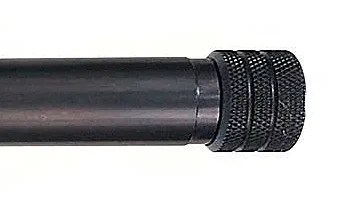
🔹 Bare Muzzle / Thread Protector
A bare muzzle has no gas-control device attached. It provides the baseline for comparing the effects of flash hiders, muzzle brakes, compensators, and other devices.
Primary Strategies: None. Propellant gases exit directly from the barrel without an attached device altering their discharge.

- Exposed Barrel End: The barrel terminates without an attached gas-control device.
- No Added Gas-Control Geometry: There are no external chambers, baffles, prongs, or directional ports beyond the barrel.


- Flash Suppression: Provides no device-based reduction in visible muzzle flash.
- Recoil Reduction: Provides no device-based reduction in rearward recoil.
- Muzzle-Rise & Lateral Control: Provides no compensating force to counter muzzle rise or lateral movement.
- Blast Direction: Gases exit forward and expand outward without a device redirecting the discharge.
- Sound Suppression: Provides no sound suppression.
- Length and Weight: A bare muzzle adds no device length or weight; a thread protector adds a small amount.
- Thread Protection: A conventional thread protector covers exposed muzzle threads without providing gas-control functionality.
- Crown Exposure: No attached device surrounds or extends beyond the crown to provide additional protection against incidental contact.
🔹 Flash Hider
Flash hiders reduce visible muzzle flash. In pure form, they prioritize flash suppression without deliberately producing braking or compensating forces.
Primary Strategies: Manage the expansion and dispersion of exiting propellant gases to reduce visible flash.

- Longitudinal Slots or Prongs: Openings extend lengthwise around the exit opening, forming either an enclosed birdcage or individual projecting prongs.
- Limited Directional Bias: Openings are distributed around the device without a pronounced upward or lateral bias.


- Flash Suppression: Reduces visible muzzle flash, with effectiveness varying among designs and firing conditions.
- Recoil Reduction: Does not provide substantial, deliberate recoil reduction in its pure form.
- Muzzle-Rise & Lateral Control: Does not deliberately produce a directional force to counter muzzle rise or lateral movement.
- Blast Direction: Generally allows discharge around the device without a pronounced directional bias.
- Sound Suppression: Does not provide sound suppression.
- Open Versus Closed Tines: Open-tine designs leave individual prongs exposed at the front. Closed-tine designs connect those segments with a front ring. This configuration difference does not independently establish flash-suppression effectiveness.
- Performance Comparisons: Flash comparisons are most useful when ammunition, barrel length, lighting, and recording conditions are consistent.
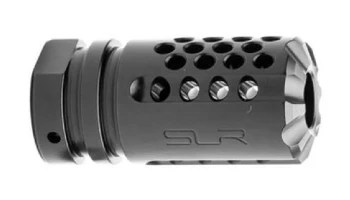
🔹 Compensator
Compensators counter muzzle rise or lateral muzzle movement. In pure form, they prioritize directional control rather than reducing rearward recoil.
Primary Strategies: Discharge propellant gases preferentially in one direction to produce an opposing reaction force.

- Directional Port Bias: Openings favor the upper portion of the device or use an asymmetric arrangement to oppose a particular direction of muzzle movement.
- Unequal Venting: Port placement or distribution creates a deliberate difference between opposing sides of the device.


- Flash Suppression: Does not inherently suppress visible muzzle flash.
- Recoil Reduction: Does not necessarily provide substantial rearward recoil reduction in its pure form.
- Muzzle-Rise & Lateral Control: Produces a directional reaction force that counters muzzle rise or lateral movement.
- Blast Direction: Concentrates gas discharge in the direction of the ports, commonly upward.
- Sound Suppression: Does not provide sound suppression.
- Direction of Compensation: Vertical compensation addresses muzzle rise; lateral compensation introduces a sideways correction that may not suit every shooter or configuration.
- Orientation: The installed orientation determines the direction of the compensating force, making timing a functional requirement.
- Excessive Compensation: A downward correction that exceeds upward muzzle movement can produce muzzle dip. Greater compensation is not automatically a better match.
Adjustable Compensation
Some compensators allow changes to gas discharge to adjust the direction or amount of compensation. This can help match muzzle behavior to the ammunition, firearm configuration, and shooter.
- Adjustment Method: Some designs use removable port plugs; others rely on permanent port modifications. Reversible adjustment offers more flexibility if the desired behavior changes.
- Setup Effort: Adjustability adds complexity and requires evaluation to establish a suitable setting. Changes in ammunition, firearm configuration, or shooting technique may warrant reassessment.
- Practical Value: A fixed compensator remains simpler when its directional effect already suits the application.
🔹 Muzzle Brake
Muzzle brakes reduce rearward recoil. In pure form, they prioritize a forward reaction force without deliberately favoring an upward or lateral correction.
Primary Strategies: Redirect exiting propellant gases to produce a force that opposes rearward recoil.

- Baffles and Chambers: Surfaces facing the exiting gas stream commonly form a series of chambers along the device.
- Lateral or Rearward-Angled Ports: Prominent openings discharge gases sideways or partly rearward.
- Balanced Port Arrangement: Opposing ports balance lateral forces rather than deliberately pushing the muzzle toward one side.


- Flash Suppression: Does not inherently suppress flash and can produce substantial visible flash.
- Recoil Reduction: Reduces rearward recoil by producing an opposing reaction force.
- Muzzle-Rise & Lateral Control: Reduced recoil can reduce recoil-driven movement, but a pure brake does not deliberately produce a directional compensating force.
- Blast Direction: Redirects gases laterally or partly rearward, increasing blast exposure beside the muzzle and potentially toward the shooter.
- Sound Suppression: Does not provide sound suppression. Redirected blast can increase sound exposure at the shooter’s position or nearby positions.
- Port Direction: Side-facing and rearward-angled ports produce different blast patterns. The location of that blast matters alongside the amount of recoil reduction.
- Shooting Environment: Nearby shooters, barriers, and enclosed firing positions can make the brake’s blast particularly disruptive.
🔹 Hybrid Device
Hybrid devices combine two or more gas-control functions as central features of the design. Consider them when the combination itself — such as flash suppression with muzzle-rise control — is a primary reason for choosing the device.
Primary Strategies: Combine two or more of the gas-control strategies described for flash hiders, muzzle brakes, and compensators.
- Combined Features: Incorporate features associated with multiple device types, such as braking chambers paired with upward-facing compensation ports.
- Variable Profile: There is no single hybrid profile. Some resemble a flash hider with additional ports; others resemble a brake with integrated compensation or flash-suppression features.


- Flash Suppression: Provided when the design incorporates effective flash-suppression features. A brake–compensator does not inherently offer this capability.
- Recoil Reduction: Provided by the braking portion of the design. Its contribution varies with how strongly the device emphasizes braking.
- Muzzle-Rise & Lateral Control: Provided by directionally biased gas discharge. The direction and degree of correction depend on the compensating features.
- Blast Direction: Reflects the combined discharge pattern. Adding flash suppression or compensation does not inherently eliminate the lateral or rearward blast associated with braking.
- Sound Suppression: Combining these functions does not provide sound suppression.
- Functional Emphasis: Identify which function receives priority. Two devices offering the same combination can deliver substantially different balances of performance.
- Combined Performance: Multiple capabilities do not establish that a hybrid matches a dedicated design in each function—or that it necessarily performs poorly at any of them. Compare each outcome separately.
- Orientation: Hybrids with directional compensation require the intended installed orientation.
- Product Naming: A product marketed as a flash hider, brake, or compensator may combine functions. Classify it by what its design does rather than its name alone.
🔹 Blast Forwarding Device
Blast-forwarding devices direct muzzle discharge forward, reducing direct lateral blast toward the shooter and nearby people. In pure form, their purpose is blast redirection.
Primary Strategies: Contain lateral gas discharge and guide it toward a forward-facing opening.

- Enclosed Sides: A surrounding body limits direct discharge through the sides of the device.
- Forward-Facing Outlet: Gas exits primarily through an opening at the front.


- Flash Suppression: Does not inherently suppress visible muzzle flash. Flash may remain visible beyond the forward opening.
- Recoil Reduction: Does not inherently provide substantial rearward recoil reduction.
- Muzzle-Rise & Lateral Control: Does not deliberately produce a directional correction to counter muzzle rise or lateral movement.
- Blast Direction: Directs discharge forward, reducing direct lateral blast while leaving substantial blast ahead of the muzzle.
- Sound Suppression: Does not provide sound suppression. Changing the direction of discharge can change perceived loudness at particular positions without making the firearm hearing-safe.
- Standalone Versus Add-On: Standalone devices attach directly to the barrel. Add-on blast shields attach over a compatible muzzle device and require a matching attachment interface.
- Removable Configuration: An add-on shield allows a change between the underlying device’s exposed discharge pattern and forward-directed blast without replacing the muzzle device.
- Covered-Device Performance: Enclosing a brake or compensator changes its gas discharge and can reduce its braking or compensating effect. Removing the shield restores the uncovered configuration.
- Length and Weight: A standalone device adds bulk at the muzzle. An add-on shield adds weight and may extend beyond the underlying device.
- Naming: Products described as “linear compensators,” “blast cans,” or “blast shields” commonly fall within this category. Forward discharge alone does not establish muzzle-rise compensation.
🔹 Sound Suppressor
Suppressors reduce the sound and pressure of muzzle blast by controlling the release of propellant gases. Sound suppression is their defining function.
Primary Strategies: Allow propellant gases to expand, lose heat, and discharge over a longer period, reducing the abrupt pressure release at the muzzle.

- Enclosed Body: A housing surrounds an internal gas-management structure, generally adding more length and diameter than conventional muzzle devices.
- Internal Gas Paths: Internal chambers or passages manage gas discharge while leaving a clear path for the projectile.

- Flash Suppression: Can reduce visible muzzle flash, but effectiveness varies with the suppressor, ammunition, and firing conditions. Sound suppression does not establish equivalent flash suppression.
- Recoil Reduction: Can reduce recoil by changing the discharge of propellant gases. The resulting recoil feel also depends on the firearm’s operating response.
- Muzzle-Rise & Lateral Control: Added muzzle weight and changes in recoil can affect muzzle movement, but a conventional suppressor does not deliberately provide directional compensation.
- Blast Direction: Contains and moderates the initial muzzle discharge before releasing gases, generally forward. Unlike a blast-forwarding device, it reduces the intensity of the pressure release rather than merely redirecting it.
- Sound Suppression: Reduces muzzle-blast sound but does not eliminate the ballistic crack of a supersonic projectile or firearm action noise. A suppressed firearm should not automatically be considered hearing-safe.
- Backpressure: Restricting gas discharge can increase residual pressure in the firearm, affecting cycling, gas exposure, and fouling. The extent varies substantially among suppressor designs.
- Reduced-Backpressure Designs: Flow-through and other reduced-backpressure designs manage gas discharge to limit these operating-system effects. Their value depends on the combination of sound suppression, flash suppression, and influence on firearm operation. Reduced backpressure alone does not establish better overall performance.
- Length and Weight: Added mass at the muzzle changes balance and handling, while added length affects maneuverability.
- Heat: Suppressors become hot during firing. Accumulated heat introduces contact hazards and can produce visible mirage through an optic.
- Sound Comparisons: Muzzle and shooter-ear measurements describe different exposure locations. Compare results obtained with consistent firearms, ammunition, and test methods.
🔹 Comparing the Categories
The combined diagram below places the general gas-flow concepts side by side. Use it to compare the categories’ primary functions; it does not rank individual products or show every possible combination.

| Muzzle Device Comparison | |||||
|---|---|---|---|---|---|
| Device Type | Flash Suppression | Recoil Reduction | Muzzle-Rise & Lateral Control | Blast Direction | Sound Suppression |
| Device Type Bare Muzzle | Flash Suppression None | Recoil Reduction None | Muzzle-Rise & Lateral Control None | Blast Direction Forward, expanding outward | Sound Suppression None |
| Device Type Flash Hider | Flash Suppression Primary function | Recoil Reduction Minimal | Muzzle-Rise & Lateral Control No deliberate correction | Blast Direction Generally distributed around muzzle | Sound Suppression None |
| Device Type Compensator | Flash Suppression Not inherent | Recoil Reduction Limited | Muzzle-Rise & Lateral Control Primary function | Blast Direction Biased toward compensation ports | Sound Suppression None |
| Device Type Muzzle Brake | Flash Suppression Not inherent | Recoil Reduction Primary function | Muzzle-Rise & Lateral Control Indirect benefit from reduced recoil | Blast Direction Lateral or partly rearward | Sound Suppression None |
| Device Type Hybrid | Flash Suppression Depends on combination | Recoil Reduction Depends on combination | Muzzle-Rise & Lateral Control Depends on combination | Blast Direction Depends on combined features | Sound Suppression None |
| Device Type Blast-Forwarding Device | Flash Suppression Not inherent | Recoil Reduction Limited | Muzzle-Rise & Lateral Control No deliberate correction | Blast Direction Primarily forward | Sound Suppression None |
| Device Type Suppressor | Flash Suppression Variable reduction | Recoil Reduction Variable reduction | Muzzle-Rise & Lateral Control Indirect effects; no deliberate correction | Blast Direction Generally forward, with moderated discharge | Sound Suppression Primary function |
|
|
|||||
Comparisons describe the basic device types relative to a bare muzzle. Actual performance varies by design, firearm, and ammunition. “None” indicates no reduction provided by an attached device.
Selection Recommendation
Use the category name to identify a device’s primary purpose, then compare its documented capabilities and limitations. Keep flash suppression, recoil reduction, muzzle-rise control, blast direction, and accessory compatibility distinct. Neither “hybrid” nor a longer feature list establishes a better overall product.
🔵 Mounting & Attachment
Importance: 9/10 — Attachment Security & Serviceability
The mounting arrangement must secure the muzzle device while maintaining its intended alignment and, where required, rotational orientation. It also determines how easily the device can be replaced and whether it can support a suppressor or other accessory.
Select the barrel interface, timing arrangement, and accessory-mount system together. Permanent attachment adds a further commitment because later changes may require removal work or replacement of affected components.
🔹 Thread Interface
A muzzle device must match the barrel’s thread diameter, pitch, and thread direction. It must also accommodate the projectile and seat against the intended barrel surface. Matching threads alone does not establish complete compatibility.
| Common Muzzle Thread Patterns | |
|---|---|
| Cartridge / Firearm Family | Common Thread Pattern |
| Cartridge / Firearm Family 5.56 NATO / .223 Rem | Common Thread Pattern 1/2×28 |
| Cartridge / Firearm Family .300 Blackout | Common Thread Pattern 5/8×24 |
| Cartridge / Firearm Family 7.62 NATO / .308 Win | Common Thread Pattern 5/8×24 |
| Cartridge / Firearm Family 9mm Pistol-Caliber Carbines | Common Thread Pattern 1/2×36 or 1/2×28 |
| Cartridge / Firearm Family AK / 7.62×39 | Common Thread Pattern M14×1 LH |
| Cartridge / Firearm Family 6.5 Creedmoor / 6mm ARC | Common Thread Pattern 5/8×24 |
|
|
|
These are common patterns, not universal cartridge standards. Inch designations specify nominal thread diameter and threads per inch; metric designations specify nominal diameter and pitch in millimeters. “LH” indicates a left-hand thread.
- Bore Clearance: The device’s projectile passage must accommodate the intended caliber. Shared threading does not make devices interchangeable across calibers.
- Seating Surface: The device must match the intended seating arrangement, whether that is a barrel shoulder, muzzle face, or specified taper. A matching thread pattern does not resolve an incompatible seating surface.
- Thread Length: Available barrel-thread length and the device’s internal clearance must allow it to reach its intended seating surface without unintended bottoming.
- Adapters: A thread adapter introduces another interface and additional length. It must preserve the required seating arrangement, bore clearance, and alignment; changing the thread pattern alone is insufficient.
🔹 Timing & Retention
Timing is the muzzle device’s rotational orientation. Directional ports and closed-bottom configurations require a particular orientation to produce their intended behavior. Rotationally symmetric devices may not require timing, although accessory-mount features can introduce an orientation requirement.
Retention keeps the device secure in that position. The mounting arrangement must provide both the required orientation and secure attachment.
Common Mechanisms:
- Crush Washer: A deformable washer accommodates rotational adjustment during tightening. It offers a simple, inexpensive arrangement for compatible standalone devices, but uneven compression can affect alignment. Many suppressor-mount systems prohibit crush washers.
- Precision Shims: Controlled-thickness spacers establish orientation without relying on washer deformation. Their flatness and thickness uniformity support consistent seating, making them common in directional devices and suppressor-mount applications. Shims establish spacing; they do not independently prevent loosening.
- Lock Nut or Timing Collar: A separate nut or collar secures the device at its intended orientation. Designs incorporating this arrangement can simplify removal and repositioning, but add hardware and depend on the particular mounting system.
- Timing Versus Alignment: Correct rotational orientation does not establish alignment with the barrel bore. A device can appear properly timed while its mounting surfaces introduce angular misalignment.
- Suppressor Compatibility: The timing hardware becomes part of the suppressor’s mounting interface. Its suitability depends on the complete mounting system, including the specified seating surfaces and hardware.
- Thread Treatment: Lubricants and threadlockers serve different purposes and affect assembly conditions. Their use depends on the mounting design; neither compensates for incompatible hardware or poor seating.
- Serviceability: Consider whether the device will remain installed or require periodic removal. The retention arrangement and any specified threadlocker affect removal effort and subsequent reinstallation.
🔹 Suppressor & Accessory Mounts
Some muzzle devices serve two roles: managing gas when exposed and providing an attachment interface for a suppressor or blast shield. This allows the accessory to be attached or removed while the muzzle device remains installed.
The mounting interface adds dedicated seating and retention features to the device. Depending on the system, these may include external threads, tapers, locking surfaces, or indexing features. Quick-attach systems differ in how they secure the accessory; the designation alone does not establish compatibility or mounting quality.
- System Compatibility: Select the muzzle device and accessory as parts of the same supported mounting system. Matching barrel threads establishes only the barrel connection; the accessory interface is a separate compatibility requirement.
- Standalone Performance: Choose the exposed device’s function according to how the rifle will be used without the accessory. A mounting system may offer flash hiders, brakes, and other configurations with different unsuppressed behavior.
- Attachment & Retention: Consider how the accessory seats, locks, and releases. Access to collars or release mechanisms matters, particularly where a handguard extends close to the mount.
- Length & Weight: Compare the complete installed assembly. Mounting hardware contributes weight and can change how far the accessory extends beyond the muzzle.
- Repeatability: Consistent seating matters when an accessory is repeatedly removed and reattached. Repeatable mounting and minimal point-of-impact shift are separate qualities: a suppressor can produce a consistent shift whenever installed.
- System Commitment: Equipping several rifles with compatible mounts simplifies moving an accessory between suitable hosts. Changing mounting systems later may require replacing multiple muzzle devices and accessory adapters.
A direct-thread suppressor attaches to the barrel without using a separate muzzle device as its mount. For a rifle that will regularly alternate between suppressed and unsuppressed use, a compatible mounting muzzle device preserves its standalone function when the suppressor is removed.
🔹 Permanent Attachment / Pin & Weld
Permanent attachment makes the muzzle device a lasting part of the barrel assembly. Pinning and welding is a common approach, providing mechanical retention that prevents ordinary unthreading while making later removal a gunsmithing operation.
This can serve a barrel-length requirement or provide additional retention for a dedicated configuration. The tradeoff is reduced flexibility when replacing the muzzle device or servicing components behind it.
- Dedicated Suppressor Hosts: Permanent attachment provides additional resistance to the muzzle device loosening or unthreading during suppressor attachment and removal. This secures the barrel-to-device connection; suppressor retention still depends on the accessory’s mounting system.
- Configuration Commitment: Finalize the device’s standalone function, accessory compatibility, timing, and alignment before permanent attachment. Changing suppressor systems later may also require replacing the permanently attached muzzle device.
- Component Serviceability: Depending on component dimensions and construction, the attached device can prevent the gas block or barrel nut from passing over the muzzle. This can complicate gas-block replacement and handguard changes that require a different barrel nut.
- Removal & Replacement: Removal adds labor and may sacrifice the muzzle device. Damage to the barrel threads is also possible, making future changes more consequential than replacing a conventionally threaded device.
- Barrel-Length Treatment: ATF’s published measurement guidance includes qualifying permanently attached muzzle devices in barrel length. Where this is the reason for permanent attachment, the completed assembly and attachment method must satisfy the applicable requirements.
Permanent attachment is most useful when the configuration is settled and the retention or barrel-length benefit justifies the loss of serviceability.
Selection Recommendation
Start with a direct match to the barrel’s threads, seating surface, and intended caliber. Prefer a compatible device over adding a thread adapter when a suitable option is available.
For devices requiring timing, prefer precision shims or a purpose-designed timing collar. A crush washer remains a practical option for standalone devices designed to use one. For suppressor mounts, use the mounting system’s specified hardware.
Choose the suppressor or accessory system before selecting its mounting muzzle device. Within compatible options, select the standalone function that best suits unsuppressed use, then consider attachment access, installed length, weight, and serviceability.
Retain removable attachment when future changes are likely. Pin-and-weld is appropriate when a settled configuration benefits from additional barrel-to-device retention or must satisfy an applicable barrel-length requirement. Weigh that benefit against the added difficulty of replacing the device, gas block, or barrel nut.
🔵 Choosing the Right Muzzle Device
A flash hider is our recommended starting point for General and Duty / Defense use, while a muzzle brake is the baseline for Competition and Precision. Compensation, sound suppression, or forward blast direction can justify a different choice when those benefits outweigh the accompanying tradeoffs in flash, blast, length, and weight.
The matrix assumes compatible barrel threads and seating geometry, adequate bore clearance, and correct dimensional alignment. Ratings reflect suitability for each application; individual designs vary in effectiveness.
| Table Legend | |
|---|---|
| Symbol | Meaning |
| B | Recommended baseline |
| + + | Strong benefit; actively prioritize |
| + | Useful benefit |
| 0 | No meaningful benefit or drawback |
| – | Meaningful drawback |
| – – | Strong drawback; generally avoid |
| Muzzle Device Type Recommendations by Application1 | ||||
|---|---|---|---|---|
| Device Type | General | Duty / Defense | Competition2 | Precision |
| Device Type Bare Muzzle | General − | Duty / Defense −− | Competition − | Precision − |
| Device Type Flash Hider | General B | Duty / Defense B | Competition 0 | Precision 0 |
| Device Type Compensator | General 0 | Duty / Defense + | Competition + | Precision 0 |
| Device Type Muzzle Brake | General 0 | Duty / Defense − | Competition B | Precision B |
| Device Type Blast-Forwarding Device | General 0 | Duty / Defense 0 | Competition 0 | Precision 0 |
| Device Type Suppressor3 | General + | Duty / Defense + | Competition 0 | Precision + |
|
|
||||
- Hybrid Devices: Evaluate hybrids according to their combined functions and tradeoffs. The category is too broad for a single application rating.
- Competition: Ratings assume action-oriented competition. Hybrid devices with brake and compensator functionality are ideal.
- Suppressors: Positive ratings reflect sound and blast reduction, balanced against added length, weight, and heat. For Precision, the rating does not imply improved accuracy; POI shift, mounting repeatability, and group consistency remain separate considerations.
PB Picks: Muzzle Devices
Flash Hiders
KAK Industry A2 Flash Hider
The KAK A2 is our conventional, economical flash-hider pick. It uses the familiar closed birdcage configuration with a solid bottom section. KAK specifies heat-treated construction and a phosphate finish, with multiple caliber and thread options.
Why We Pick It:
- Value: Provides a straightforward flash-hider configuration at a low price, making it a practical starting point.
- Compact Profile: Short, lightweight A2 configuration with no exposed prongs.
- Closed Bottom: Limits downward gas discharge, helping reduce dust disturbance when firing close to the ground and providing mild compensation effects.
- Caliber Selection: KAK offers a wide variety of bores and thread patterns for small frame, large frame, and pistol calibers.
Considerations:
- Corrosion Resistance: Protection depends on the phosphate finish and lubrication; lubricant will generally burn off with extended firing schedules.
SureFire SOCOM Flash Hiders
SureFire SOCOM flash hiders combine dedicated flash suppression with a quick-attach suppressor interface. They are machined from heat-treated 17-4PH stainless steel and finished with DLC.
Why We Pick It:
- Flash Suppression: SureFire reports greater than 99% flash reduction for its open three- and four-prong designs.
- Suppressor Mounting: Doubles as a quick-attach mount for compatible SureFire SOCOM suppressors.
- Mount Sealing: The open tine three- and four-prong models incorporate labyrinth seals that reduce gas leakage and carbon buildup at the suppressor’s rear mounting interface.
Considerations:
- Cost & Size: The SOCOM mounting interface comes with substantially greater cost and a larger profile than the conventional A2 birdcage.
- Variant Selection: Three versus four prongs does not independently establish a performance ranking. Choose the specific configuration for its documented performance and compatibility.
- Mounting-System Compatibility: SOCOM adapters are not interchangeable with SureFire’s earlier Fast-Attach mounting systems. Select the appropriate caliber, barrel-thread version, and suppressor-compatible model.
Compensators
SLR Rifleworks Synergy Mini Comp
The Synergy Mini Comp is our compact compensator pick. The standard 5.56 model uses 416 stainless steel with a Melonite QPQ finish and 1/2×28 threading.
Why We Pick It:
- Compact Profile: Provides a compensator option with a short, cylindrical body that keeps muzzle bulk modest.
- Muzzle Control: Suits buyers prioritizing reduced muzzle movement and sight recovery in a compact configuration.
Considerations:
- Blast & Flash: Compensation redirects muzzle gas through exposed ports. Choose it for muzzle control rather than flash suppression.
Walker Defense Research NERO
The NERO is our premium compensator pick, with a design focused on minimizing muzzle climb. It uses an additively manufactured Inconel body with an Ionbond DLC coating.
Why We Pick It:
- Muzzle Control: Walker’s design emphasizes minimizing muzzle climb, making it a candidate when maintaining the sight picture is the primary selection goal.
- Heat Resistance: Inconel provides a material foundation suited to the high temperatures and repeated thermal exposure experienced at the muzzle.
Considerations:
- Cost & Size: Its premium price and larger body require more commitment than a compact, conventional compensator.
- Blast: Walker identifies reduced felt concussion relative to traditional brakes as a design objective. This should not be interpreted as sound suppression or elimination of muzzle blast.
Muzzle Brakes
Precision Armament M4-72
The M4-72 is our pick for strong recoil reduction in a relatively compact package. Its three-baffle design redirects gas partly rearward. It is machined from heat-treated 416 stainless steel, with either a black Ionbond CrCN coating or an uncoated matte stainless finish.
Why We Pick It:
- Recoil Reduction: Precision Armament reports approximately 73–75% recoil reduction with standard .223 Remington, making recoil management the primary reason to select it.
- Compact Profile: The 5.56 model measures 2.25 inches long and weighs 2.6 ounces, providing substantial braking capability without a large, heavy body.
- Closed Bottom: Limits downward discharge to reduce dust disturbance when shooting near the ground.
Considerations:
- Blast & Concussion: Rearward-directed discharge is a substantial tradeoff. Precision Armament specifically cautions against excessive blast on barrels shorter than 14.5 inches and on bullpup configurations.
- Timing Hardware: Precision Armament recommends its AccuWasher system, which is sold separately.
Precision Armament M11
The M11 is our precision-oriented muzzle-brake pick. It combines a large symmetrical blast baffle with two forward baffles and a closed bottom. Construction is heat-treated 416 stainless steel, offered with a black DLC coating or an uncoated matte stainless finish.
Why We Pick It:
- Recoil Reduction: Precision Armament reports recoil-energy reduction of 70% or greater for many cartridges, based on its ballistic-pendulum testing. Actual reduction varies with the cartridge and configuration.
- Muzzle Control: Top ports direct gas upward to counter muzzle rise, complementing the recoil reduction provided by the main baffles.
- Alignment & Gas Symmetry: The threads and bore aperture are machined in the same operation, while the symmetrical blast chamber is designed to balance gas flow around the departing projectile.
- Closed Bottom: Limits downward discharge, making it useful for prone shooting where ground disturbance matters.
Considerations:
- Size & Weight: At 2.675 inches long, 1.375 inches wide, and 5.6 ounces, the standard M11 adds appreciably more muzzle bulk and weight than the M4-72.
- Blast: Substantial lateral discharge remains a tradeoff for the shooter and adjacent firing positions.
- Timing Hardware: Requires rotational timing. Precision Armament prohibits crush washers and recommends its separately sold AccuWasher system.
Hybrid Devices
Precision Armament Hypertap
The Hypertap is our pick for strong recoil reduction with the option to add directional compensation. It uses a heat-treated 400-series stainless steel body and an integrated timing nut, with black CrCN-coated and matte stainless versions available.
Why We Pick It:
- Recoil Reduction: Precision Armament reports 84% recoil-energy reduction in pendulum testing with 55-grain .223 Remington ammunition and a 16-inch barrel.
- Configurable Compensation: Provision for optional directional porting allows compensation to be tailored when additional muzzle-movement control is needed.
- Integrated Timing: The included timing nut eliminates the need for separate timing shims or washers.
Considerations:
- Permanent Adjustment: Compensation tuning involves permanent modification rather than reversible adjustment. Excessive compensation can drive the muzzle downward and reduce braking effectiveness.
- Blast & Concussion: Reverse venting remains a substantial tradeoff. Precision Armament recommends a minimum barrel length of 14.5 inches.
- Flash Performance: The manufacturer’s claim of no increased flash does not establish flash suppression comparable to a dedicated flash hider.
SureFire SOCOM WarComp
The WarComp is our pick for combining flash suppression and muzzle-rise compensation while retaining a compatible SureFire SOCOM suppressor interface. It uses heat-treated 17-4PH stainless steel with a DLC coating.
Why We Pick It:
- Flash Suppression: SureFire reports greater than 98% flash reduction for the open-prong WarComp.
- Muzzle Control: Compensation ports counter muzzle rise, adding directional control to the flash-hider configuration.
- Suppressor Mounting: Doubles as a quick-attach mount for compatible SureFire SOCOM suppressors.
Considerations:
- Suppressed Performance: The WarComp lacks the labyrinth seals found on the SOCOM open tine three- and four-prong flash hiders. Its porting and mount leakage can compromise sound suppression; PEW Science documented substantially poorer suppression with a WarComp than with the three-prong mount on the same SOCOM762-RC2 test setup.
- Primary Use: We favor it for primarily unsuppressed use where flash suppression and compensation both matter. For frequent suppressed use, we prefer a compatible SOCOM mount with labyrinth seals.
Blast-Forwarding Devices
Troy Claymore
The Claymore is our compact, standalone blast-forwarding pick. It attaches directly to the barrel and uses 4140 steel with a phosphate finish. The 5.56 model measures 2.25 inches long and uses 1/2×28 threading.
Why We Pick It:
- Blast Direction: Directs discharge forward to reduce direct lateral blast toward adjacent shooters.
- Recoil Reduction: The ported front wall provides surfaces for gas pressure to exert a forward force opposing recoil. Troy describes the Claymore as retaining braking properties, but does not publish a quantified recoil-reduction figure.
- Compact Profile: Provides forward blast direction in a shorter package than the KX3.
- Standalone Mounting: Attaches directly to the barrel without requiring a separate muzzle device or proprietary accessory mount.
Considerations:
- Corrosion Resistance: The phosphate finish benefits from retained oil; heat from extended firing can remove that protection.
- Selection Role: Despite the “muzzle brake” name, forward blast direction is our primary reason to select it.
Noveske KX3
The KX3 is our enclosed chamber-and-cone option for forward blast redirection. Its internal chamber temporarily contains expanding propellant gases before releasing them through a forward-facing cone. It uses heat-treated chromoly construction, with a black nitride finish on the common 1/2×28 and 5/8×24 versions.
Why We Pick It:
- Blast Direction: Contains lateral discharge and directs exiting gases forward, away from adjacent shooting positions.
- Recoil Reduction: Gas pressure acting on the internal cone and body can produce a forward force that opposes recoil. Noveske identifies this as a benefit of the design, although it does not publish a quantified recoil-reduction figure.
Considerations:
- Backpressure: Temporary gas retention is intended to increase backpressure. Its effect on cycling depends on the host firearm; it should not be treated as a universal reliability improvement.
- Size & Weight: At 3.28 inches long, 1.35 inches in diameter, and 7 ounces, the KX3 adds substantial muzzle bulk and weight.
- Finish Selection: The M14×1 LH and M15×1 versions use phosphate rather than the nitride finish specified for the common AR-threaded versions.
SureFire Warden
The Fast-Attach Warden is our removable blast-shield pick for rifles already using a compatible SureFire SOCOM muzzle device. It surrounds the installed device and redirects discharge forward. SureFire specifies heat-treated stainless steel construction with a Cerakote finish.
Why We Pick It:
- Blast Direction: Contains lateral discharge from the underlying device, reducing direct blast toward adjacent firing positions.
- Removable Configuration: Attaches and detaches without removing or retiming the underlying muzzle device.
- System Compatibility: Uses the SOCOM Fast-Attach interface, making it a convenient accessory for an existing compatible setup.
Considerations:
- Cost & Mount Dependency: Requires a compatible SOCOM muzzle device, adding expense if the rifle does not already have one.
- Size & Weight: The Warden weighs 7.8 ounces in addition to the underlying device and has a 1.5-inch body diameter.
- Covered-Device Performance: Redirecting the underlying device’s discharge changes its behavior; its uncovered braking or compensation performance should not be assumed to remain intact.
Frequently Asked Questions
Start with the result you want. A flash hider is our baseline for General and Duty / Defense use, while a muzzle brake is our baseline for Competition and Precision. A compensator prioritizes muzzle-rise control, a blast-forwarding device redirects lateral blast, and a suppressor provides sound suppression with additional size, weight, and operating-system considerations.
Confirm barrel-thread compatibility, bore clearance, and seating geometry before comparing performance. If a suppressor or removable blast shield is planned, select the mounting system first so the muzzle device supports the complete configuration.
A flash hider primarily reduces visible muzzle flash.
A muzzle brake primarily reduces rearward recoil by redirecting gas against baffle surfaces and out through lateral or partly rearward-facing openings.
The main tradeoff is discharge behavior. A brake can provide substantial recoil reduction but increases blast toward nearby positions. A dedicated flash hider generally provides little recoil reduction, while a dedicated brake does not inherently suppress flash. Choose a flash hider when flash reduction matters most and a brake when recoil reduction justifies the accompanying blast.
Choose a muzzle brake when reducing rearward recoil is the priority. Choose a compensator when controlling muzzle rise or lateral movement is the priority. A compensator may also reduce some recoil, but that is separate from its deliberate directional correction.
Reduced recoil can indirectly reduce muzzle movement, so the benefits overlap without making the functions identical. Commercial products may incorporate both braking and compensation features. Compare the particular design and its demonstrated performance rather than relying solely on whether the manufacturer calls it a “brake” or “compensator.”
Yes, when their combined functions address your priorities. A flash-hider/compensator can combine flash reduction with muzzle-rise control, while a brake/compensator can combine recoil reduction with directional correction.
“Hybrid” does not establish a particular performance level or guarantee balanced results. It also does not mean the device must perform worse than a dedicated design. Evaluate each claimed function separately, including the resulting blast, flash, size, and weight. Select a hybrid because its specific combination is useful, rather than assuming that more functions automatically make it the better choice.
A blast-forwarding device changes where the discharge travels; it does not provide sound suppression. Directing gas forward can reduce direct lateral concussion and change perceived loudness at the shooter’s position or beside the rifle, while substantial blast remains ahead of the muzzle.
Choose one when reducing lateral blast is the goal. An add-on shield also changes how the underlying brake or compensator discharges gas, so its uncovered performance should not be assumed to remain intact. A blast-forwarding device does not make an unsuppressed rifle hearing-safe or replace a sound suppressor.
No. The device must match the barrel’s thread diameter, pitch, and direction, provide adequate projectile clearance, and seat against the intended shoulder, muzzle face, or taper. Thread length and internal clearance also affect whether it can seat correctly.
Matching threads alone is insufficient. For example, some 5.56mm and 9mm barrels both use 1/2×28 threads, but a device intended for 5.56mm may not provide adequate clearance for a 9mm projectile. Suppressor and accessory interfaces introduce another compatibility requirement: the muzzle device must belong to the specific supported mounting system.
They can affect either, but point-of-impact shift and group size are different outcomes. Adding or changing a muzzle device or suppressor changes the mass and loading at the muzzle and can change barrel vibration. A group may move while remaining just as tight.
For a removable suppressor, repeatable seating matters because attachment and removal should produce predictable results. A consistent shift can be accounted for; wandering impact or larger groups is a separate concern. Select for secure attachment, alignment, and repeatability rather than assuming that a suppressor automatically improves precision or that any zero shift indicates poor performance.
Start with compatibility with the exact suppressor mounting system. Then consider attachment security, alignment, repeatable seating, access to the locking mechanism, and the device’s performance when the suppressor is removed.
Mount design can also affect suppressed performance. In PEW Science testing, the same SureFire SOCOM762-RC2 produced substantially different sound results between a WarComp and a three-prong flash-hider mount because of differences in gas leakage at the interface. Suppressor compatibility therefore establishes that a device can mount the suppressor; it does not establish that every compatible device performs equally well.
Yes. A conventional AR does not generally require a muzzle device to function, provided the barrel and muzzle are serviceable. A bare muzzle avoids the added length, weight, and mounting requirements of a device.
The tradeoff is losing the flash suppression, recoil reduction, blast redirection, or accessory-mount capability that a suitable device could provide. On a threaded barrel, a correctly fitted thread protector protects the exposed threads without adding those performance functions. A bare muzzle or thread protector is a valid configuration when those benefits are unnecessary.
Prioritize demonstrated flash suppression with a comparable cartridge, barrel length, and ammunition. A dedicated flash hider is the appropriate starting point when flash reduction is the main objective, but open tines, closed tines, or prong count alone do not establish a performance ranking.
Then consider suppressor-mount compatibility, size, and any ringing associated with the particular design. Treat manufacturer flash-reduction percentages as test-specific claims rather than universal results. A hybrid may still offer useful flash suppression, but its additional functions should be evaluated against the same flash-performance priority.
Permanent attachment is worthwhile when a defined barrel-length objective or retention requirement justifies committing to the configuration. For a suppressor host, it can add security at the barrel-to-device connection, but it does not secure the separate suppressor-to-mount interface.
The tradeoff is serviceability. Replacing the device becomes more involved, and its dimensions may prevent removal of a gas block or barrel nut over the muzzle. Settle the device, mounting system, and foreseeable component changes first. We generally prefer removable attachment when there is no specific reason to make the installation permanent.
Final Thoughts
Choose a muzzle device for the benefit that matters most to the rifle’s intended use. A flash hider is our starting point for General and Duty / Defense applications; a muzzle brake is our baseline for Competition and Precision. Compensation, forward blast direction, or sound suppression can justify a different choice when those benefits outweigh the accompanying tradeoffs.
Compatibility, alignment, and secure attachment remain prerequisites. From there, prioritize demonstrated performance, materials suited to the firing schedule, and a mounting arrangement that supports your suppressor or accessory plans. The best choice delivers the function you need at an acceptable cost in blast, flash, size, weight, and serviceability.