
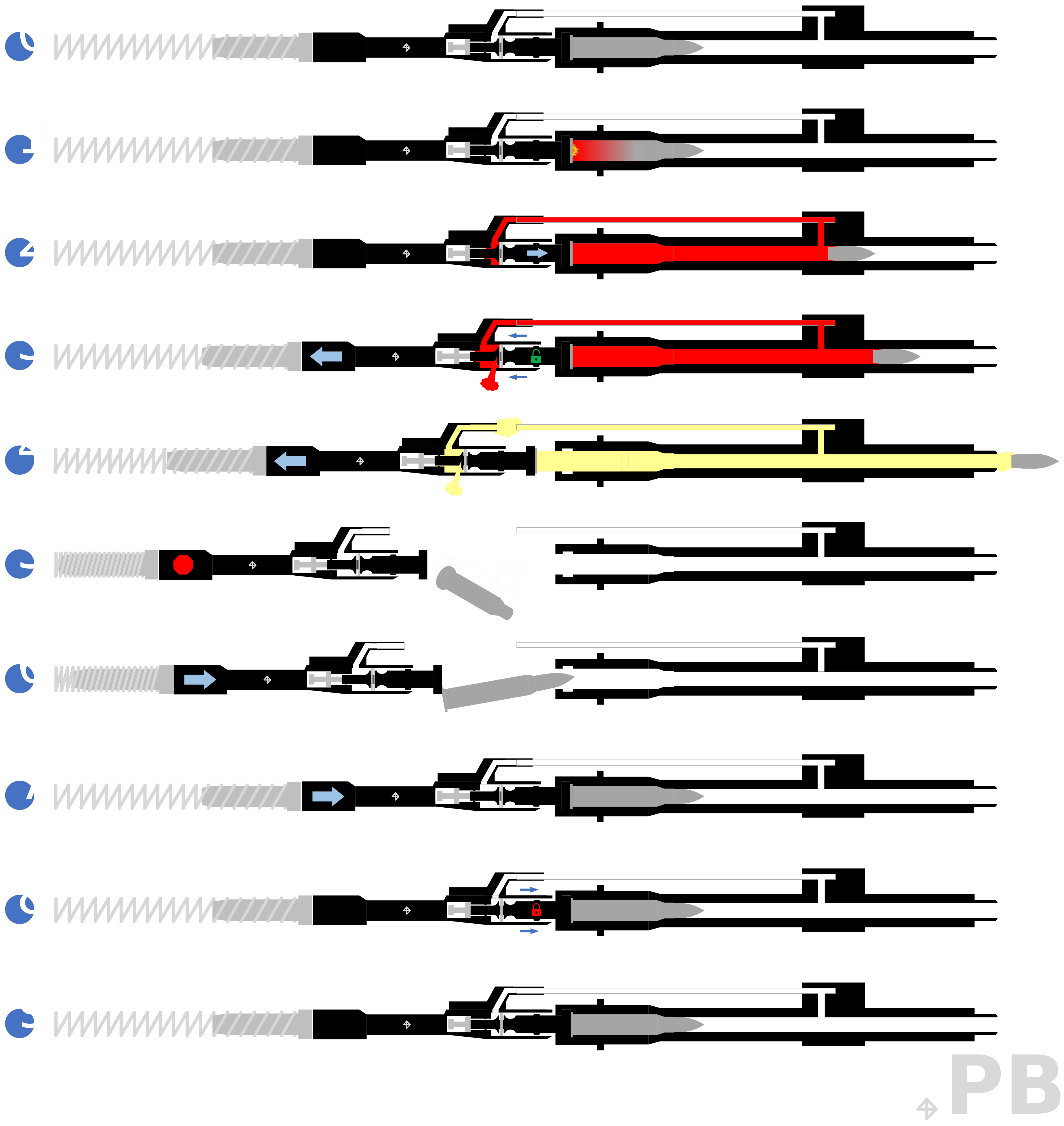
- The sequence begins with a live round in the chamber and the bolt locked.
- The hammer strikes the firing pin, the firing pin strikes the primer, the primer ignites the powder in the cartridge. The pressure builds in the cartridge until the bullet is dislodged from the neck of the case. The bullet is driven onto the lands and down the bore.
- As the tail of the bullet passes the gas port, pressurized gas floods into the gas system. Pressure accumulates in the BCG. This pressure pushes the bolt forward to relieve tension between the bolt lugs and barrel extension.
- The gas pressure drives the bolt carrier rearward. As the carrier moves rearward, the gas rings move forward and expose vents, allowing the pressure to dissipate. As the carrier moves, the cam pin rides in a cam pin track cut in the carrier. This causes the bolt to rotate in the barrel extension.
- As the bullet leaves the muzzle, the gas pressure in the bore and gas system drops to ambient pressure. The bolt is now unlocked and the entire bolt carrier group begins moving to the rear of the gun. The extractor pulls the spent case out of the chamber.
- The BCG cycles to the rear of the receiver extension against the mass of the buffer and the tension of the buffer spring. The ejector throws the spent case out of the gun through the ejection port. The kinetic energy of the BCG and buffer is absorbed by the buffer spring until they come to a stop.
- The loaded spring drives the reciprocating mass back forward. As the bolt passes over the magazine, it strips another round and drives it over the feed ramps and into the chamber.
- As the bolt meets the barrel extension, the bolt comes screeching to a halt while the carrier continues to drive forward.
- As the carrier continues forward, the bolt does not and it retracts into the carrier. This causes the cam pin to travel in the cam pin track, which causes the bolt to rotate and lock into the barrel extension.
- The sequence ends with another live round in the chamber, ready for the next cycle.
Every bit of this cycle is important to the proper function of the AR. But, the first half of this sequence is critical. In our review of the AR-15 operating system, we will spend a lot of time exploring these events and interfaces in great detail. We will also explain how dysfunction of the these sub-systems is responsible for many malfunctions in the AR, especially those that happen in the latter half of the sequence above.
For a more dynamic view of these operations, we present to you this phenomenal animation from 45Snipers:
Components of the AR Operating System
We break the operating system down into sub-systems. A thorough understanding of each sub-system contributes to an overall understanding of the entire system.
Receivers
- Upper Receiver
- Lower Receiver
Handguard & Mounting
- Handguard
- Barrel Nut
Barrel
- Barrel
- Barrel Extension
Gas System Components
- Gas Block
- Gas Tube
- Gas Tube Roll Pin
Bolt Carrier Group
- Bolt Carrier
- Gas Key
- Gas Key Screws
- Bolt Head
- Extractor
- Extractor Pin
- Extractor Spring
- Extractor O-Ring
- Extractor Insert
- Ejector
- Ejector Roll Pin
- Gas Rings
- Cam Pin
- Firing Pin
- Firing Pin Retainer
Buffering Components
- Buffer
- Buffer / Action Spring
- Buffer Retainer
- Buffer Retainer Spring
- Receiver Extension / Buffer Tube
- Receiver Extension End Plate
- Receiver Extension Castle Nut
Trigger Group Components
- Trigger
- Hammer
- Disconnector
- Trigger Spring
- Hammer Spring
- Disconnector Spring
- Hammer / Trigger Pins
Muzzle Devices
- Muzzle Device
- Spacer or Crush Washer
Controls
- Charging Handle
- Safety Selector
- Safety Selector Detent
- Safety Selector Spring
- Bolt Catch
- Bolt Catch Buffer
- Bolt Catch Spring
- Magazine Catch & Release Button
- Magazine Catch Spring
- Pivot / Takedown Pins
- Pivot / Takedown Detent
- Pivot / Takedown Spring
Furniture & Shooter Interface
- Buttstock
- Pistol Grip
- Pistol Grip Screw
- Pistol Grip Screw Lock Washer
- Foregrip